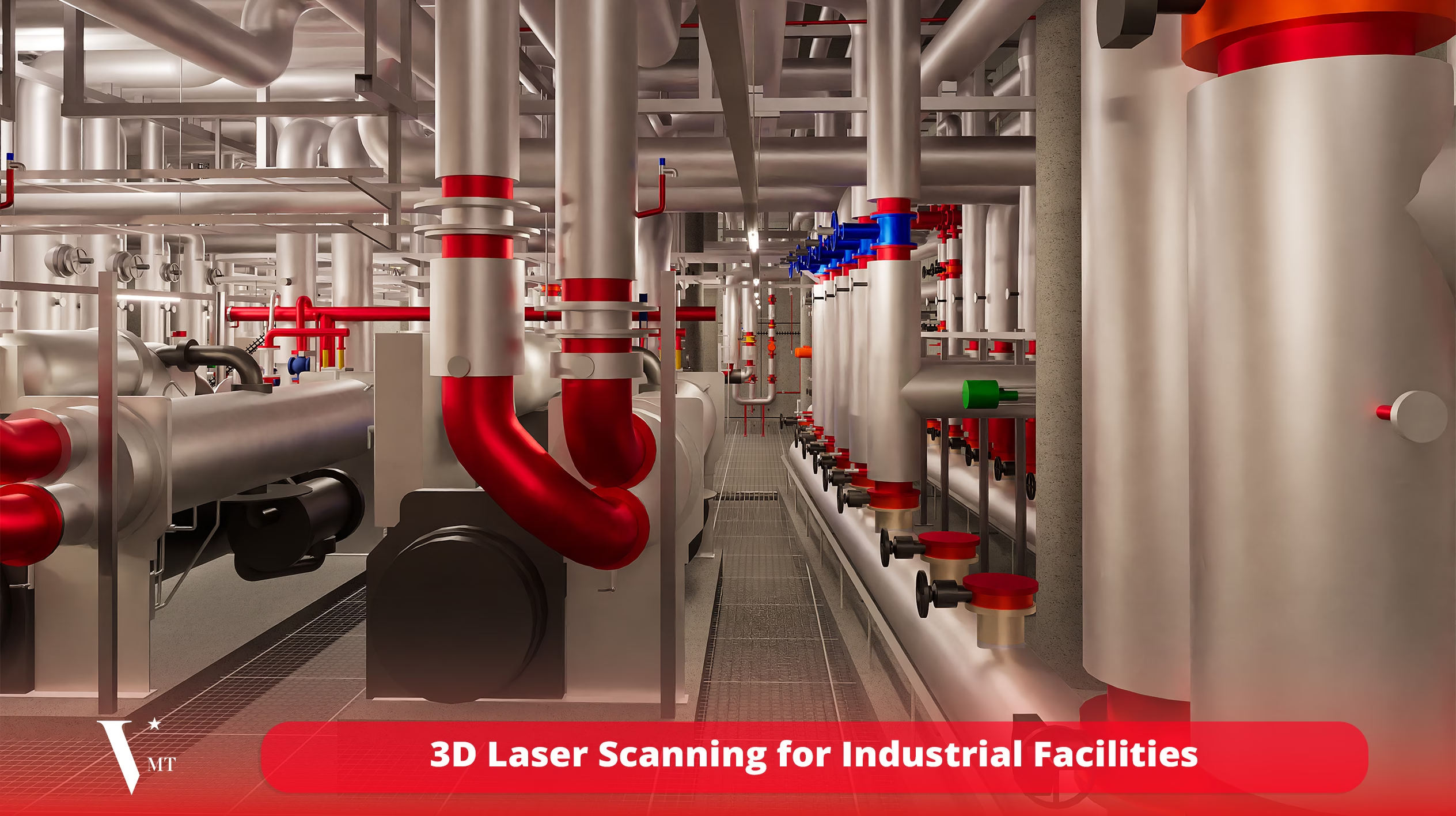
3D laser scanning for industrial facilities is today one of the most reliable methods for accurately documenting complex industrial plants as as-built conditions. Modern laser scanners allow plant structures to be captured as highly detailed point clouds, which then serve as the foundation for planning, renovations, or BIM models.
In practice, however, it becomes clear that even small workflow errors in 3D laser scanning for industrial facilities can quickly lead to significant follow-up costs. The reason is simple: industrial plants are highly complex systems. Pipelines, cable trays, steel structures, machine foundations, tanks, valve groups, and sensors are closely interconnected in space. A seemingly small offset in the point cloud can later cause pipes not to fit, flanges not to align, or components to collide.
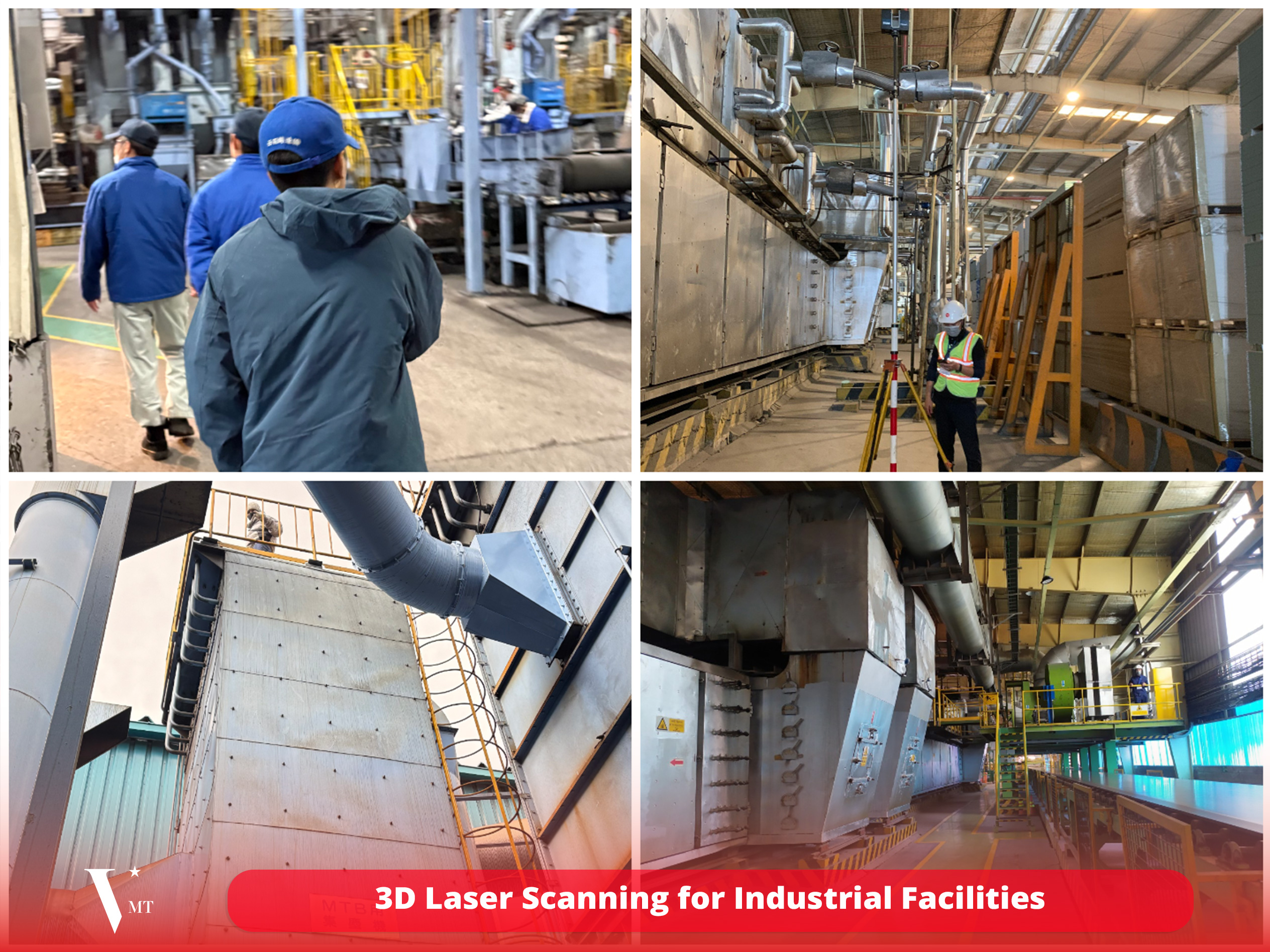
Another challenge is time pressure. Many scanning campaigns in industrial facilities take place during ongoing operations or within short shutdown windows (shutdown or turnaround). If data is missing or captured incorrectly during this phase, a re-measurement is often only possible with considerable effort – sometimes not until the next plant shutdown. This can take months.
Another cost factor is safety zones and restricted access. Industrial facilities operate under strict regulations: restricted areas, hazardous (Ex) zones, PPE requirements, work permits, and limited access times. Without a clear strategy for 3D laser scanning of industrial facilities, incomplete scan coverage can easily occur – especially around valves, flanges, or critical connection points.
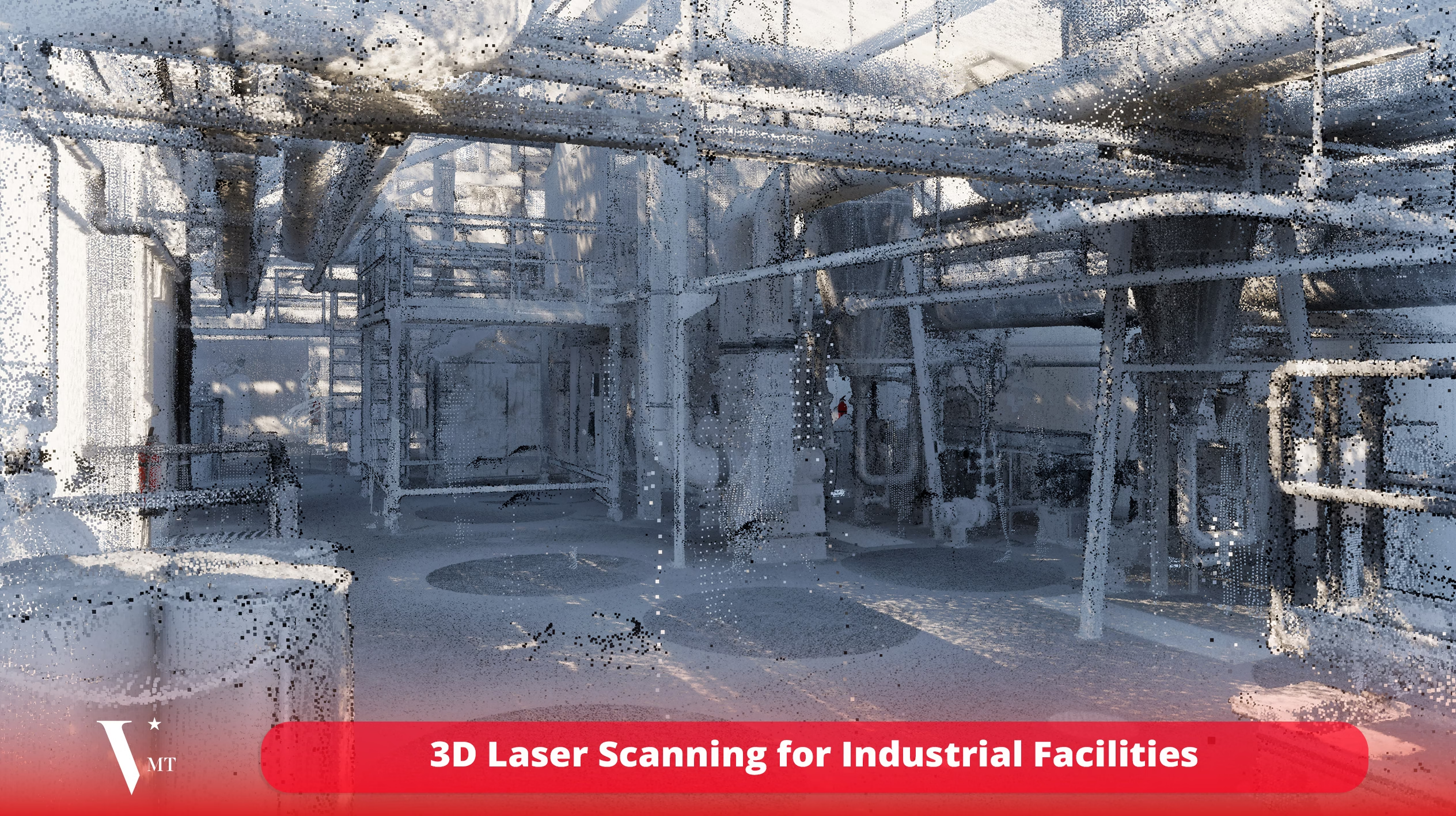
It is also important to understand the difference between a “visually clean point cloud” and a technically usable dataset. A point cloud may look impressive but still be unsuitable for planning or BIM models if the coordinate system, tolerances, or quality assurance are incorrect.
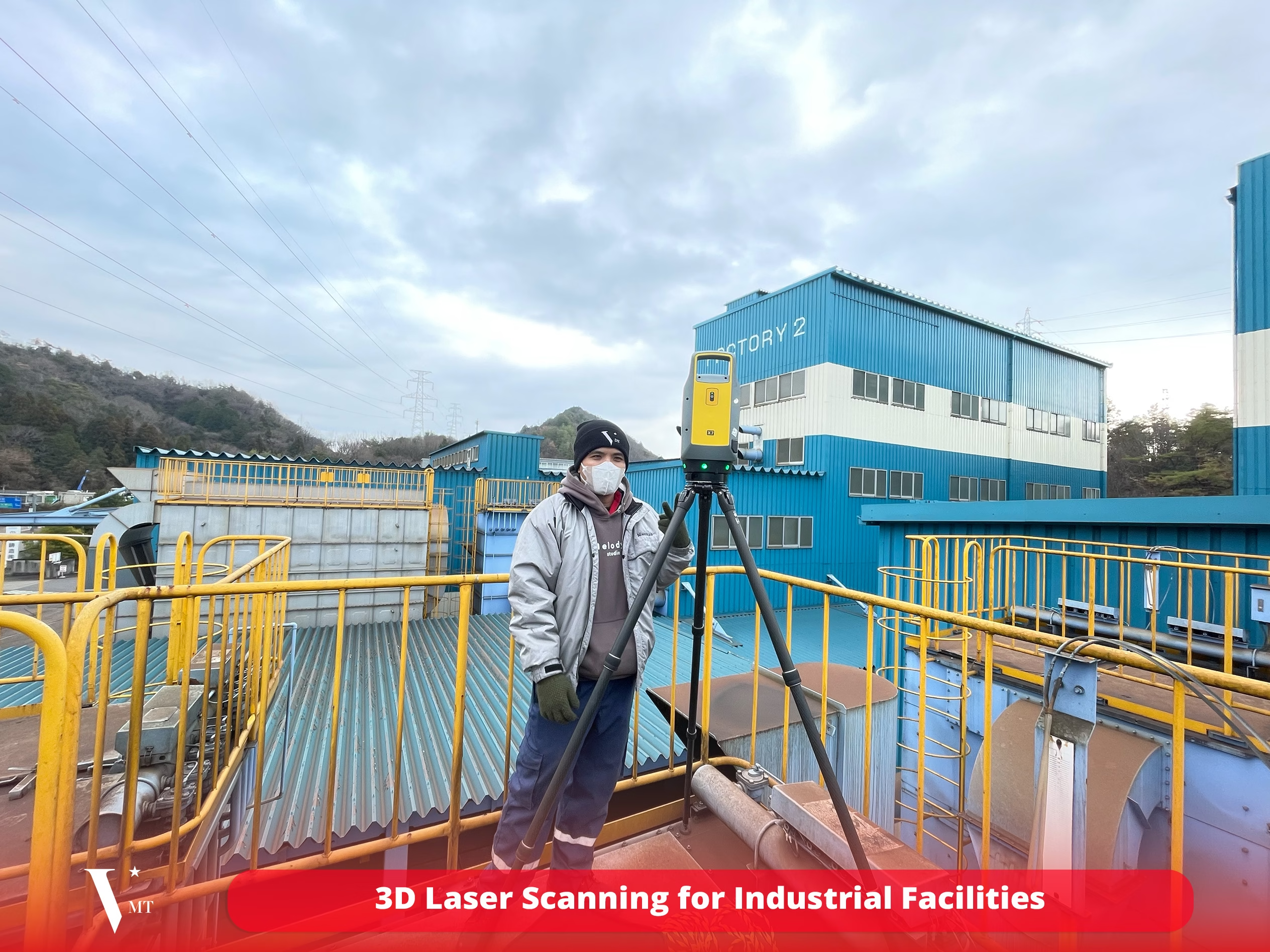
Table of Contents
Why 3D Laser Scanning for Industrial Facilities Is Particularly Challenging
Complex plant structures, shutdown windows, and safety zones
Industrial facilities are spatially dense, multi-layered, and have often evolved over many years. Many areas are only visible from specific viewpoints. During 3D laser scanning for industrial facilities, this often leads to so-called “blind spots.” These missing data areas are often only noticed later – exactly when they are needed for modifications or clash detection.
During turnaround phases, every hour counts. If the scan is incomplete, a re-measurement is often only possible during the next shutdown. This means that small oversights during industrial laser scanning can quickly become major risks: delays, additional installation costs, or planning errors.
Safety and access regulations further increase complexity. In hazardous (Ex) zones or restricted areas, additional scan stations cannot simply be added spontaneously. Without proper planning, data capture remains incomplete.
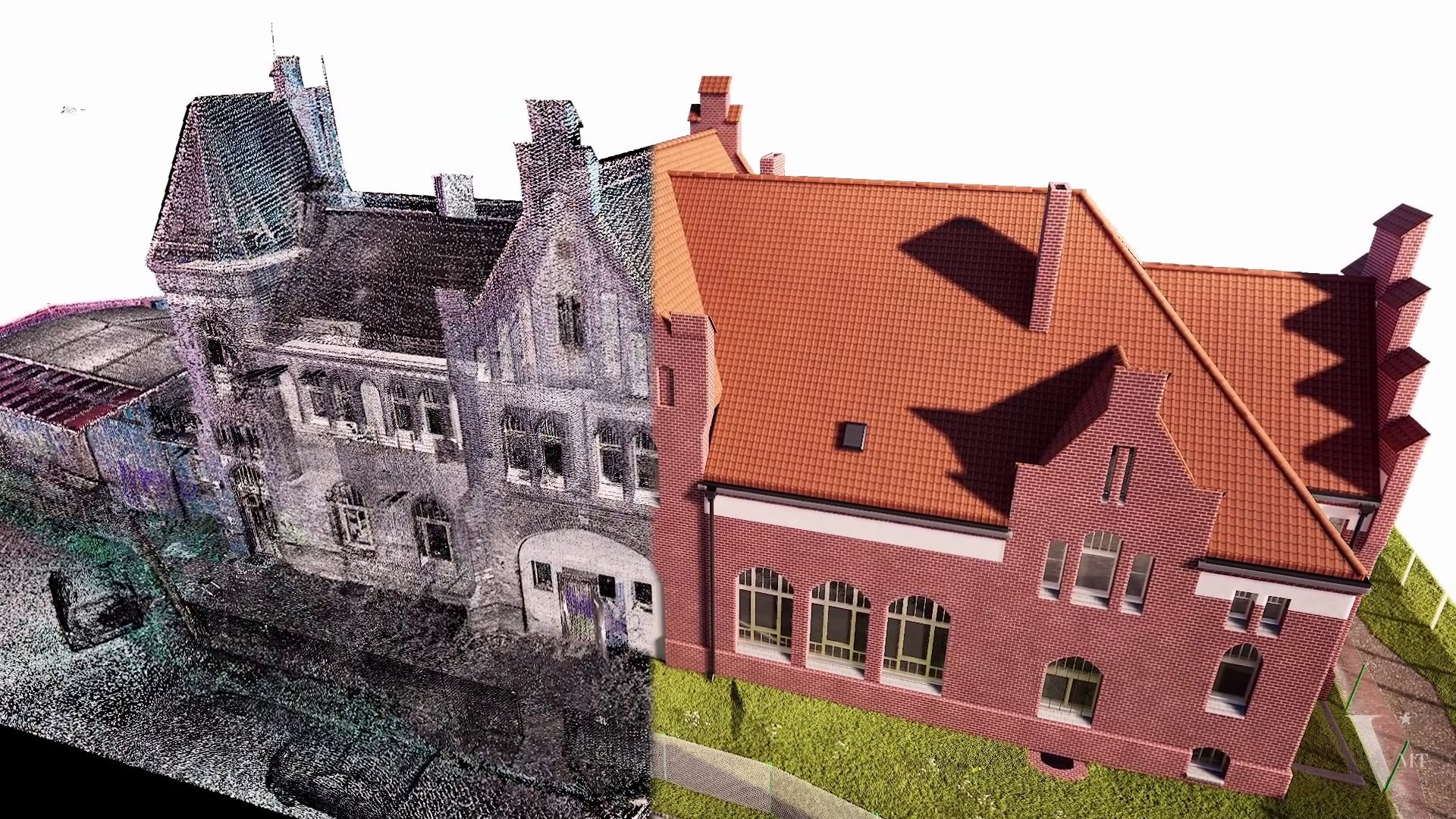
This is where VMT SOLUTIONS comes in. We support industrial, engineering, and surveying teams in transforming point clouds into reliable planning foundations – from point cloud registration and QA/QC to Scan-to-CAD and Point Cloud to BIM for renovation and coordination projects.
Error 1: Unclear Requirements in 3D Laser Scanning for Industrial Facilities
Solution: Define accuracy, coordinate systems, and deliverables
One of the most common mistakes occurs even before the first scan begins. In 3D laser scanning for industrial facilities, clear project requirements are essential. Simply saying “we need a 3D scan” is too vague.
The key question is how the data will be used:
- As-built documentation
- Retrofit planning
- Clash detection
- BIM coordination
- Installation planning
Each of these applications requires different levels of accuracy, data structures, and modeling detail.
Practical solution: Define four key aspects at the beginning of the project:
- Accuracy and tolerances – for example at flanges or pipe connections
- Coordinate system – local system or plant grid
- Deliverables – point cloud, 2D CAD, BIM model, or IFC
- Acceptance criteria – measurable QC standards
At VMT SOLUTIONS, projects often begin with a compact scope check to ensure that the resulting point cloud can later be reliably used for CAD or BIM models.
Error 2: Incomplete Scan Coverage in Industrial Facilities
Solution: Strategic scan positions and sufficient overlap
During 3D laser scanning of industrial facilities, data gaps usually occur due to insufficient coverage. Pipelines, steel structures, and cable trays often block sightlines. If scan positions are poorly selected, blind spots occur.
Typical mistakes include:
- scan stations placed too far apart
- insufficient overlap between scans
- lack of prioritization of critical areas
Practical solution:
- Plan sufficient overlap – especially in long pipe racks
- Secure critical areas – valves, flanges, and connection points
- Perform a quick on-site check – identify gaps immediately
For projects with existing scan teams, VMT SOLUTIONS also provides a compact scan plan review to identify critical areas before data acquisition begins.
Error 3: Movements and Reflective Surfaces
Solution: Adapt the scanning strategy to industrial environments
Industrial facilities are dynamic environments. Personnel, vehicles, or rotating machinery can cause ghosting or noise in the point cloud during 3D laser scanning for industrial facilities.
Additionally, materials such as stainless steel or shiny metal surfaces make data capture more difficult. Reflections often produce incomplete point clouds.
Practical solution:
- perform scans during quieter operational phases
- capture scans from multiple angles
- increase point density in critical areas
- apply noise filtering carefully
In projects handled by VMT SOLUTIONS, such risk zones are identified during the QA/QC phase to ensure reliable interpretation of the point cloud.
Error 4: Errors in Registration and Georeferencing
Solution: Quality control of the point cloud
Registration is a critical step in 3D laser scanning for industrial facilities. Particularly dangerous is so-called drift – small deviations that accumulate across large plant areas.
Typical causes include:
- insufficient scan overlap
- missing targets or control points
- lack of quality verification
Practical solution:
- checkpoints for independent accuracy verification
- deviation maps
- cross-section analyses
- clear versioning of point cloud data
VMT SOLUTIONS provides structured QA/QC documentation to ensure that CAD and BIM teams can reliably work with the data.
Conclusion: Successful 3D Laser Scanning for Industrial Facilities
Three key success factors: planning, coverage, and QC
Most problems in 3D laser scanning for industrial facilities are not caused by the technology itself, but by unclear planning or missing quality assurance.
- Planning – define clear project requirements
- Coverage – ensure critical areas are fully scanned
- QC – systematically verify registration and point cloud quality
When these three factors are properly addressed, a point cloud becomes a reliable foundation for Scan-to-CAD and Point Cloud to BIM.
Are you planning a project involving 3D laser scanning for industrial facilities?
VMT SOLUTIONS supports you as an experienced partner for registration, QA/QC, as well as Scan-to-CAD and BIM modeling based on point cloud data.
About the Author:
Nguyen Huynh (Rainer)

As the Co-Founder and Chief Executive Officer of VMT Solutions, SSIFT Vietnam, BlackSwiss Vietnam, and Victoria Measuring Solutions PTY LTD (Australia), I completed my Master’s program in Technical and Vocational Education and Training (TVET) in Germany in 2007.
With over a decade of experience in point cloud processing and BIM services, I am passionate about tackling complex challenges and developing innovative workflows to enhance accuracy and detail in point cloud-to-BIM conversion.
At VMT Solutions, we are committed to delivering high-quality services that provide exceptional value, especially for surveying companies. We focus on building mutually beneficial partnerships, ensuring that our clients receive customized solutions tailored to their specific needs. Every day, I strive to push the boundaries of the industry, continuously improving our methods and exploring new ways to optimize the services we provide.
Related Posts
Recent Posts

Tag Cloud

We are proud to have
satisfied customers.

 Gerd Gindullis, Lecturer for digital as-built data capture at Aachen University of Applied Sciences, TerraMeta 3D Laser Service
 Stefan Schramm, Architekt Stefan Schramm
„Your plans are perfect; I’ve never seen anything like this before. These are drawings of the highest quality, I must say. I want to express my sincere thanks once again for your work.“
 Endre Szokolai, Digitalplan-Szokolai
VMT modeled a large industrial building in 3D for our research project. We provided DWG plans to VMT, and they delivered a highly detailed model, including the building envelope, interior walls, openings, and stairs. We had previously contracted a German company for the same object, but unfortunately, it didn’t work out. I was relieved and pleased that VMT handled it so reliably. Thank you for the excellent work and the truly fair price!

Very reliable company, courteous staff, and top-quality work. Our plans were created quickly and accurately. Thank you for that. Highly recommended.
Excellent advice and high 3D modeling quality at a great price-performance ratio… What more could you want? I can highly recommend them…